

In This Broad Earth
Minnesota Winds Chamber Winds
Sunday, October 26 | 3:00 p.m.
Westminster Hall, Minneapolis
Sunday, November 2 | 2:00 p.m.
Historic Knowlton Auditorium, Austin
In This Broad Earth (2020)
Steven Bryant
Inspired by a line from Walt Whitman’s Song of the Universal, In This Broad Earth celebrates the beauty and vitality of our planet—“the seed perfection” that lies within it. Bryant wrote the piece after hiking in the Austrian Alps with his wife, conductor Verena Mösenbichler-Bryant, and the work captures that sense of awe and connection to the natural world.
Listeners will hear broad, open harmonies suggesting vast landscapes, bright brass fanfares that feel like sunlight breaking across mountains, and rhythmic surges that evoke the living pulse of the Earth itself. Commissioned by the Michigan State University Wind Symphony and dedicated to conductor Kevin Sedatole, the piece radiates both grandeur and gratitude—an exuberant reminder of our shared home and the beauty that surrounds us.

Steven Bryant is a composer whose music has reshaped the landscape of contemporary band. His works—celebrated for their bold architecture, rhythmic energy, and emotional clarity—are performed by ensembles around the world. Bryant has written for many of the nation’s top bands, including the Dallas Winds, the University of Texas Wind Ensemble, and the U.S. Air Force Band of Mid-America, as well as orchestras such as the Minnesota Orchestra and the Detroit Symphony. The son of a professional trumpeter and music educator, he values music education and composes works for musicians of all ages. He studied composition with John Corigliano at The Juilliard School and lives in Durham, North Carolina.
Overture for Winds, Op. 24 (1824/2008)
Felix Mendelssohn
ed. Don Patterson
Felix Mendelssohn was just fifteen when he composed his Overture for Winds—a dazzling achievement for a young musician whose talent already rivaled the great masters. Originally written in 1824 for the 11-piece wind ensemble of the Grand Duke of Mecklenburg-Schwerin, the piece was later expanded by Mendelssohn into a richly orchestrated concert work, and is now recognized as a pillar of the concert band repertoire.
Though conceived for the outdoor Harmoniemusik tradition popular in 19th-century Europe, the overture feels every bit as symphonic as his more famous orchestral works. Listeners can hear youthful brilliance in its quick, graceful melodies and sparkling interplay among the winds, balanced by lyrical passages that reveal Mendelssohn’s remarkable gift for elegance and clarity.
This music invites us to imagine a young composer already brimming with ideas—writing for friends, court musicians, and perhaps even for his own delight. Beneath its charm and wit lies a sense of adventure: the sound of a prodigy discovering his voice through the colors of the wind ensemble.
Program note adapted from materials by John P. Boyd and the Los Angeles Philharmonic / Hollywood Bowl.

Felix Mendelssohn (1809–1847) was one of the great musical prodigies of the 19th century—a composer, conductor, pianist, and champion of the music of Bach. Born in Hamburg into a family of artists and thinkers, Mendelssohn showed extraordinary talent from a young age, composing and performing publicly before his teens. By seventeen, he had written the famous Overture to A Midsummer Night’s Dream, displaying the lyrical grace and brilliance that defined his music throughout his life.
Mendelssohn’s gifts as a conductor and composer helped shape the Romantic era while honoring the clarity of earlier classical traditions. He led the Leipzig Gewandhaus Orchestra, founded the Leipzig Conservatory, and brought renewed attention to Bach’s works with his 1829 revival of the St. Matthew Passion. His music—radiant, elegant, and full of youthful spirit—continues to inspire musicians and audiences nearly two centuries later.
Adapted from program notes by the Atlanta Symphony Orchestra.
Seascape, Op. 53 (1958)
Ruth Gipps
In a time when professional music was largely dominated by men, British composer and conductor Ruth Gipps charted her own course. She founded and led the Portia Wind Ensemble—an all-women group that premiered works by leading British composers and provided rare opportunities for women to perform professionally. Seascape, written in 1958 for this ensemble, reflects both Gipps’s pioneering spirit and her deep connection to nature.
The work was inspired by a visit to the seaside town of Broadstairs, where Gipps stayed in a hotel overlooking the English Channel. “I could hear the sea,” she recalled. “I always loved the sound of the sea and particularly storms.” Those sounds echo vividly through the music—gentle swells rising into powerful surges, moments of calm giving way to sudden motion, like sunlight breaking through storm clouds.
Scored for double wind quintet, Seascape paints the ocean not just as a place, but as an experience—beautiful, unpredictable, and endlessly alive.
Program note adapted from Christine Higley (University of Maryland, 2021) and the publisher’s materials.

Ruth Gipps (1921–1999) was a British composer, conductor, oboist, and pianist whose determination and talent broke barriers in mid-20th-century classical music. Born in Bexhill-on-Sea, she showed remarkable ability from a young age, performing Beethoven’s Emperor Concerto at just 13 and later studying at the Royal College of Music with Gordon Jacob and Ralph Vaughan Williams.
In an era when women rarely held positions of leadership in music, Gipps forged her own path—composing more than 70 works, including five symphonies, and conducting ensembles that championed new music and young performers. She founded both the Portia Wind Ensemble, an all-women chamber group, and the London Repertoire Orchestra, which she led for over 30 years.
Though her lyrical, Romantic style often stood apart from contemporary trends, Gipps’s voice remained steadfastly her own—bold, expressive, and deeply human.
Adapted from her obituary in The Guardian (1999). Photo credit: Gipps Family, BBC.
Vesuvius (1999/2020)
Frank Ticheli
Mt. Vesuvius, the volcano that destroyed Pompeii in A.D. 79, serves as a powerful symbol of both natural force and human vulnerability in this work. Frank Ticheli originally imagined a wild, passionate dance reminiscent of an ancient Roman bacchanalia—a festive celebration filled with music, movement, and ritual. As the composition evolved, however, he envisioned something more explosive and fiery, reflecting the looming threat over a city alive with markets, temples, and vibrant public life.
Ticheli’s driving rhythms, shimmering winds, and thunderous percussion evoke both the excitement of daily life and the tension of impending disaster. Quotations from the Dies Irae of the medieval Requiem Mass remind listeners that life can be fragile and fleeting. Pompeii was a city of contrasts: alongside its culture and celebrations, many residents lived under harsh conditions, including poverty, slavery, and limited rights for women. Vesuvius captures this duality—life at its most vibrant and human, set against the unstoppable force of nature. Through vivid orchestration and relentless momentum, the music immerses listeners in both the energy and the fragility of this ancient city.

Frank Ticheli is an American composer and conductor known for his vibrant, rhythmically driven works for wind ensemble, orchestra, and choir. Born in Monroe, Louisiana, he studied composition at the University of Southern California and earned a Doctor of Musical Arts degree from the University of Michigan. Ticheli’s music combines lyricism with energetic rhythms and colorful orchestration, often drawing inspiration from history, culture, and human experience. He taught composition at the University of Southern California’s Thornton School of Music from 1991-2023 and is celebrated worldwide for works that engage both performers and audiences with their emotional depth and technical vitality.
Photo credit: MacDowell
and the swallow (2017)
Caroline Shaw
arr. Danielle Fisher
Originally written as a choral work for the Netherlands Chamber Choir, and the swallow draws its text from Psalm 84. Shaw was deeply moved by the verse, “how beloved is your dwelling place,” while reflecting on the Syrian refugee crisis, and the work became a meditation on the human longing for safety and home. The music flows gracefully between moments of anxiety and repose, capturing both the fragility and resilience of life.
The imagery of Psalm 84 is particularly striking in the verse, “The sparrow found a house and the swallow her nest, where she may place her young.” This evokes the universal desire to protect one’s family, a theme that resonates across cultures and time. Danielle Fisher transcribed the piece for wind ensemble, preserving its lyricism and gentle strength, allowing audiences to experience Shaw’s tender and expressive work in a new instrumental setting.

Caroline Shaw is a composer, violinist, vocalist, and producer known for exploring new worlds of sound. She moves fluidly among genres and mediums, collaborating with artists ranging from Yo-Yo Ma and Renée Fleming to Nas and Rosalía. Shaw’s work has earned her the Pulitzer Prize in Music, four Grammys, an honorary doctorate from Yale, and a Thomas J. Watson Fellowship. She has composed for ensembles including the LA Philharmonic and New York Philharmonic, and her recent projects include scores for film, television, and stage such as Leonardo Da Vinci (Ken Burns/PBS) and Fleishman is in Trouble (FX/Hulu). Shaw currently tours with groups including Sō Percussion, Roomful of Teeth, and Attacca Quartet. Her music is celebrated for its lyricism, inventiveness, and human warmth.
Photo credit: Kait Moreno carolineshaw.com
Three Pieces for Ten Winds (2013)
John Steinmetz
In this reflective work, composed for double wind quintet, Steinmetz draws inspiration from the feeling of spaciousness—the sense of being part of a vast pattern, connected with everyone and everything. The second movement unfolds several musical ideas that evolve seamlessly without interruption, leading directly into the third movement—listen closely for the subtle changes in mood. Steinmetz emphasizes that while composers and performers work to shape the music, the ultimate meaning is created in the listening experience. The audience’s response completes the work, helping to define its place in the world.
This piece invites listeners to inhabit a shared space of reflection and empathy, where each moment of sound encourages awareness, connection, and the sense that we are part of something larger—woven into the vast, unfolding pattern of the universe itself.

John Steinmetz is a composer, teacher, and former bassoonist based in Los Angeles. As a freelance musician, he performed widely across classical, contemporary, and world music—including film scores, jazz, folk, and traditional West African drumming—and appeared with ensembles such as the Los Angeles Chamber Orchestra, Camerata Pacifica, and XTET. His compositions explore diverse styles, social and environmental themes, and audience engagement, often inviting listeners to participate in shaping the music’s meaning. Steinmetz now focuses on teaching and composing, bringing his wide-ranging musical experience to both students and audiences.
Havana (2018/2020)
Kevin Day
arr. Josh Trentadue
This piece is inspired by the vibrant city of Havana, its people, and its rich musical traditions. Kevin Day draws on Cuban rhythms and percussion to highlight dance genres such as salsa, mambo, and cha-cha, while creating a work in his own distinctive voice.
Cuban music reflects a complex history shaped by African, Indigenous, and European influences. Afro-Cuban rhythms form the foundation for styles from rumba to timba, and over centuries, Havana has blended these with jazz, classical, and popular music, creating a sound that is lively, layered, and expressive. The city itself—with its colorful streets and bustling plazas—serves as both inspiration and character in the music.
Originally begun in 2017 and revisited in 2018, Havana paints a musical picture of the city, celebrating its energy, beauty, and musical identity. Its infectious rhythms and vibrant textures invite performers and audiences to tap their feet, sway with the music, and experience the joy, resilience, and exuberance that define Havana.
Program note adapted from the composer’s original notes and reporting from NPR Music/ALT.LATINO.

Dr. Kevin Day (b. 1996) is an award-winning composer, jazz pianist, and conductor based in Las Vegas. His music blends contemporary classical, jazz, and Latin influences, exploring rhythm, texture, and melody across genres. Day’s works have been performed worldwide by ensembles including the United States Marine Band, Cincinnati Opera, Houston Symphony Orchestra, and Dallas Winds. He is the recipient of numerous awards, including the ITEA Harvey Phillips Award for Excellence in Composition, a MacDowell Fellowship, and the BMI Composer Award. Day’s opera Lalovavi: An Afrofuturist Opera will premiere at Cincinnati Opera in 2026. He currently serves as Artist Teacher in Residence, Composition at the Keys Conservatory at Pinecrest Academy in Henderson, Nevada.
Photo credit: Sara Bill Photography
Conductor

William Eddins is a husband, father, Taoist, musician, writer, and entrepreneur living and working in the great city of Minneapolis.
He is the Music Director Emeritus of the Edmonton Symphony Orchestra and a frequent guest conductor of major orchestras throughout the world.
Engagements have included the New York Philharmonic, St. Louis Symphony, Philadelphia Orchestra, the symphony orchestras of San Francisco, Boston, Minnesota, Cincinnati, Atlanta, Detroit, Dallas, Baltimore, Indianapolis, Milwaukee, Houston, as well as the Los Angeles and Buffalo Philharmonics.
William is also the co-founder of MetroNOME Brewery LLC, a socially missioned brewery in lowertown Saint Paul. Proceeds from MetroNOME go to providing musical instruments, lessons, and education for underprivileged youth in the Twin Cities Metro area. He strongly believes that education in general, and music education in particular, is the gateway to a better, more fulfilling life, and he wants to ensure that any child who loves music can find a way to play.
A native of Buffalo, NY, William attended the Eastman School of Music, where he played with the legendary wind ensemble and studied with David Effron, graduating at age eighteen. He also studied conducting with Daniel Lewis at the University of Southern California and was a founding member of the New World Symphony in Miami, FL.
Musicians
-
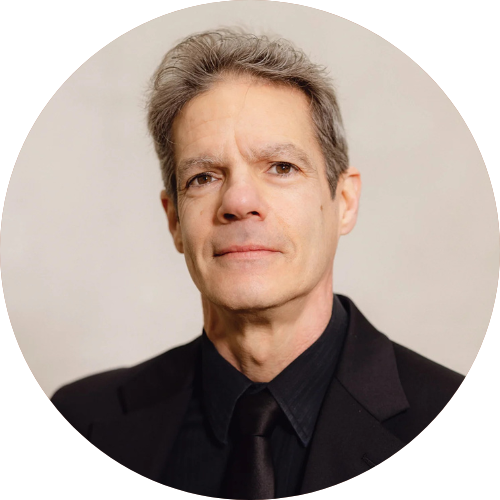
Adam Kuenzel, flute
Adam Kuenzel has served as Principal Flute in the Minnesota Orchestra since 1990. He is a frequent soloist at Orchestra Hall and has premiered numerous acclaimed works including two concertos by Manuel Sosa and Stanislaw Skrowaczewski. Adam has appeared at leading festivals including the Aspen Music Festival and the Grand Teton Music Festival, and as guest principal flute with the Boston, Chicago, Baltimore, Dallas, and Pittsburgh symphony orchestras. (Photo credit: Zoe Prinds-Flash)
-

Fei Wen, flute & piccolo
Fei Wen is an active freelance musician and private instructor who has performed with the Baltimore Symphony Orchestra, Pro Musica Chamber Orchestra and the Minnesota Orchestra. In the summer, she plays with the Moziac Summer Festival in San Luis Obispo, California. Fei received a Bachelor's Degree in flute performance from the Central Conservatory of Music in Beijing. She now also has an Artist Diploma from Oberlin Conservatory and a Master's Degree from the Cincinnati College Conservatory of Music at the University of Cincinnati.
-
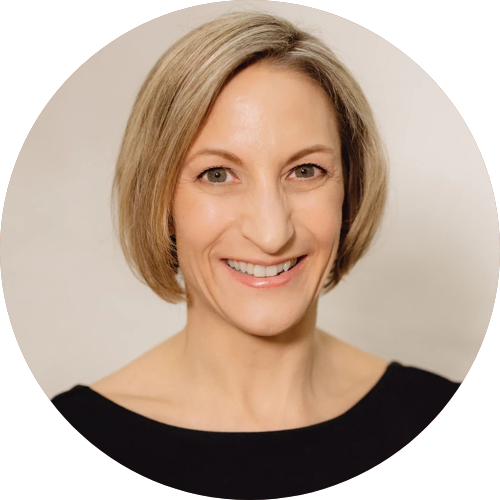
Julie Gramolini Williams, oboe
Julie Gramolini Williams has been a member of the Minnesota Orchestra’s oboe section since 2007. She previously performed with the Omaha Symphony and served as Principal Oboe of the United States Air Force Band of the West in San Antonio, Texas. Julie serves as the Board Chair of CAYO and also contributes as a Teaching Artist, leading educational initiatives in Cuba and facilitating the delivery of essential supplies to students and educators. (Photo credit: Zoe Prinds-Flash)
-
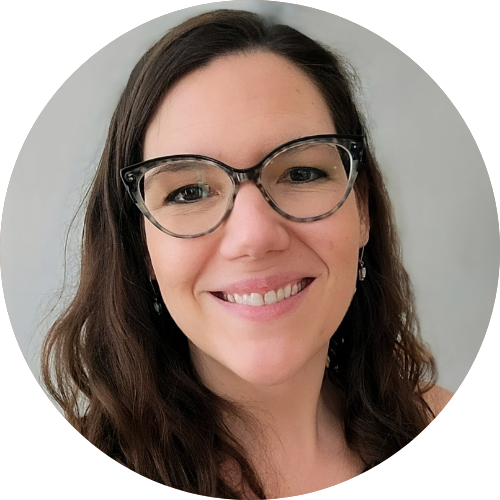
Sarah Boyle Carmack, oboe & English horn
Sarah Boyle Carmack is a Twin Cities freelance oboist and multifaceted artist, who specializes in painting Minnesota nature. She is the principal oboist of Minnesota Sinfonia, the English hornist of the Duluth Superior Symphony Orchestra, a soloist and chamber musician, and educator of oboe, reed making, and gouging machine repair and knife sharpening.
-

Olivia Hamilton, clarinet
Olivia Hamilton recently completed a two-year Minnesota Orchestra Fellowship and is now Principal Clarinet of the Sioux City Symphony Orchestra and a tenured member of the Chautauqua Symphony Orchestra. She has been a finalist in the Sphinx Orchestra Partners Audition Competition and has performed with the Sphinx Symphony Orchestra and the Kennedy Center Honors Orchestra, the latter broadcast nationally on CBS. Olivia earned her Master of Music degree from Northwestern University.
-

Daniel Friberg, clarinet
Daniel Friberg has performed widely across the United States and internationally in South Korea, Russia, the Czech Republic, Belgium, Hungary, Austria, Italy, and France. He holds Bachelor's and Master's degrees from Yale University and a Doctor of Musical Arts degree from the University of Minnesota. In addition to performing and teaching, Daniel manages the printed music department of Groth Music. He collects and plays historical clarinets and chalumeaux, and is the author of the pedagogical duet book “Clarinet Excerpts in Context: Duets for Ensemble Mastery.” (Photo credit: Autumn Lee)
-

Preston Duncan, alto & soprano saxophones
Preston Duncan is an internationally acclaimed saxophonist who has performed as a soloist in venues across Paris, Berlin, Los Angeles, Chicago, Nashville, Boston, Costa Rica, Mexico, and Taiwan. He performs regularly with the Minnesota Orchestra and is Professor of Saxophone at the University of Minnesota.
-

Fei Xie, bassoon
Fei Xie joined the Minnesota Orchestra as Principal Bassoon in 2017, after serving in the same role with the Baltimore Symphony Orchestra—becoming the first Chinese-born bassoonist to hold a principal position in a major American symphony orchestra. He has given masterclasses and recitals at conservatories and festivals throughout the United States, China, Cuba, and Brazil, and serves on the faculty of the University of Minnesota. (Photo credit: Zoe Prinds-Flash)
-

Emma Plehal, bassoon
Emma Plehal is a member of the South Dakota Symphony Orchestra and Orchestra Iowa, where she plays bassoon and contrabassoon. She also serves on the music faculty at Luther College in Decorah, Iowa, and has performed with the Minnesota Orchestra, Saint Paul Chamber Orchestra, and Minnesota Opera. In addition to performing and teaching, Emma is a freelance writer and editor, creating program notes and marketing materials for music organizations nationwide. She earned her Doctor of Musical Arts degree in bassoon performance from the University of Minnesota.
-

Patrick Pridemore, horn
Patrick Pridemore has performed with a wide range of artists and ensembles, from Aretha Franklin, Cheap Trick, and Harry Connick Jr. to the Orpheus Chamber Orchestra, the Philadelphia Orchestra, and the Metropolitan Opera. His playing is featured in films including The Manchurian Candidate, The Greatest Showman, and Joker. Patrick spent more than two decades as a freelance musician in New York City performing on and off Broadway.
-
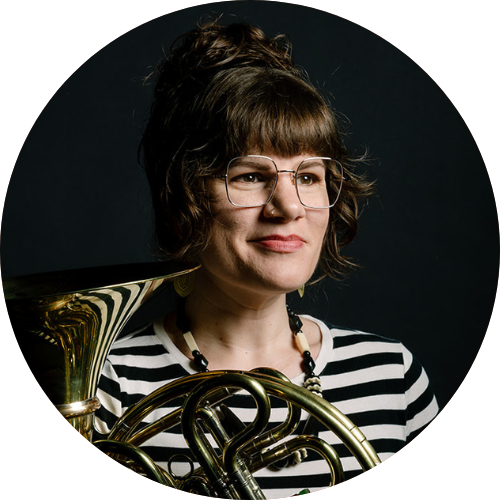
Jenna McBride-Harris, horn
Jenna McBride-Harris is Second Horn of the South Dakota Symphony Orchestra, Visiting Assistant Professor of Horn at St. Olaf College, and an active freelancer with the Minnesota Opera, Minnesota Orchestra, and Saint Paul Chamber Orchestra. Jenna earned her Doctorate of Music degree from The Ohio State University. Career highlights include performing for Norwegian royalty and playing under the batons of Doc Severinsen and John Williams. (Photo credit: @Audreychristine.co)
-

Manny Laureano, trumpet
Manny Laureano was Principal Trumpet of the Minnesota Orchestra for 44 years until his retirement in 2025. He is in demand as a soloist, clinician, and conductor with ensembles throughout the region, and has been Music Director of the Bloomington Symphony Orchestra for 12 seasons. Manny and his wife, Claudette, co-directed the Minnesota Youth Symphonies for 32 years. A graduate of The Juilliard School, he also holds a second-degree black belt in Kenpo. Manny got his start playing the trumpet in junior high band in East Harlem, New York, and he served as the first conductor of Minnesota Winds in 2024. (Photo credit: Zoe Prinds-Flash)
-

Lynn Erickson, trumpet
Lynn Erickson played Second Trumpet with the Saint Paul Chamber Orchestra for 34 years before retiring in 2025. She is an active performer whose credits include the Minnesota Orchestra, Mill City Opera, and Broadway productions at the Ordway. She is Principal Trumpet of the Minneapolis Pops Orchestra and teaches at Augsburg University. Lynn earned her Doctor of Musical Arts degree from the University of Minnesota. (Photo credit: LeslieShankPhotography)
-

Felix Regalado, trombone
Trombonist Felix Regalado recently completed a Minnesota Orchestra Fellowship. A graduate of Northwestern University’s Bienen School of Music, where he earned his Master of Music degree, he was a regular member of the Civic Orchestra of Chicago, the training ensemble of the Chicago Symphony Orchestra. Felix now teaches trombone at Macalester College.
-

Jacob Grewe, tuba
Jacob Grewe is a freelance tubist and educator. He completed his Doctor of Musical Arts degree in tuba performance, with a minor in musicology, at the University of Wisconsin–Madison. He teaches at the College of Saint Benedict and Saint John’s University and serves as Lecturer of Tuba and Euphonium at the University of Wisconsin–Eau Claire.
-

Eri Isomura, percussion
Eri Isomura is a founding member and the artistic director of the 10th Wave Chamber Music Collective, is a member of Heartland Marimba, and regularly performs with the Duluth Superior Symphony Orchestra, Theater Mu, and Champagne Confetti. Eri has two solo/duo albums and is endorsed by Innovative Percussion and Koide Cymbals. She is former adjunct faculty at St. Olaf College (2019–2023), past president of the MN Chapter of the Percussive Arts Society (2022–2025), and the percussion seminar instructor at GTCYS. eriisomura.com 10thwave.org